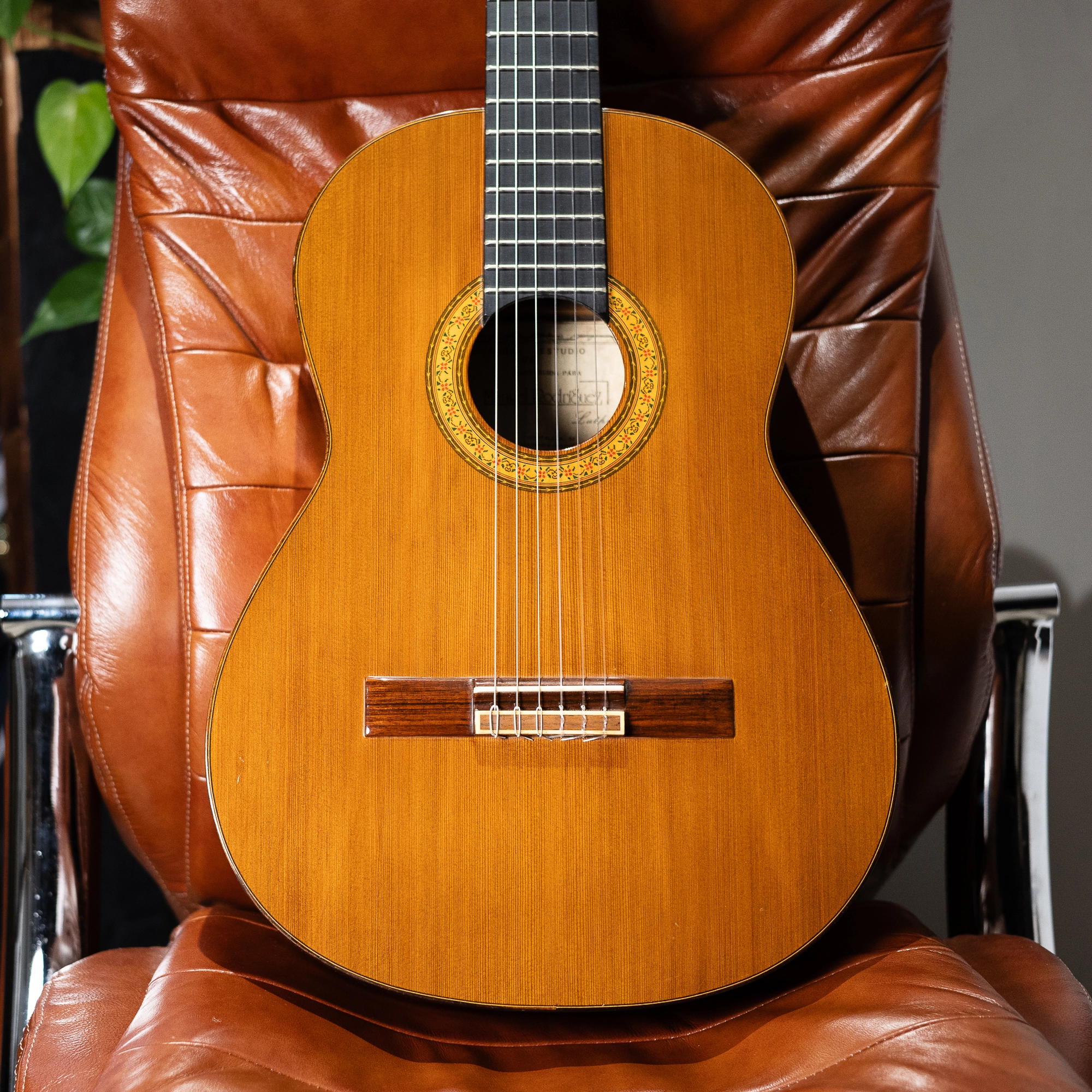
The Rodríguez family's guitar-making history reaches back to 1905, when Manuel Rodríguez Pérez began learning the trade with Agustín de Andrés. He subsequently worked with makers including Julián Gómez Ramírez and Santos Borreguero. His son, Manuel Rodríguez II, entered the Ramírez workshop as a young apprentice in 1939, absorbing the methods of the Madrid school before establishing a workshop of his own in 1955. Four years later, he moved to Los Angeles, introducing the family's Spanish guitars to a wider American audience.
The third generation, Manuel Rodríguez Jr., grew up between California and Spain. His career continued the family's international outlook, connecting workshop traditions with the practical demands of a broader guitar market. The family established a factory near Madrid in 1994, extending production while retaining Spanish guitar design as its reference point. The history is therefore both a family story and a record of the classical guitar travelling beyond the small workshop.
More recently, the Rodríguez name has developed through a partnership with GEWA music, intended to make its instruments available to a wider community of players. The brand's stated approach combines classical guitar traditions with contemporary production and an interest in sustainability. As the range has evolved across different periods and partnerships, the origins, materials and construction of an individual Rodríguez guitar are best understood through its own specification and label.

 View instrument ↗
