Yamaha's classical-guitar tradition brings Japanese instrument making into close contact with Spanish workshop methods. A dedicated guitar research and development division was established in 1966, and the company invited the Spanish luthier Eduardo Ferrer to its workshop in Hamamatsu to train its craftsmen. The first Grand Concert models, the GC-5, GC-7 and GC-10, followed in November 1967, giving Yamaha a concert-guitar foundation rooted in that exchange of knowledge.
The company continued to investigate the relationship between woods, structure, manufacturing methods and tone rather than treating those first designs as a finished formula. Further work with the Spanish maker Manuel Hernández informed the GC30 custom classical guitars introduced in 1974. Subsequent generations of Grand Concert instruments developed different tonal approaches, with techniques from the flagship models informing more accessible instruments in the range.
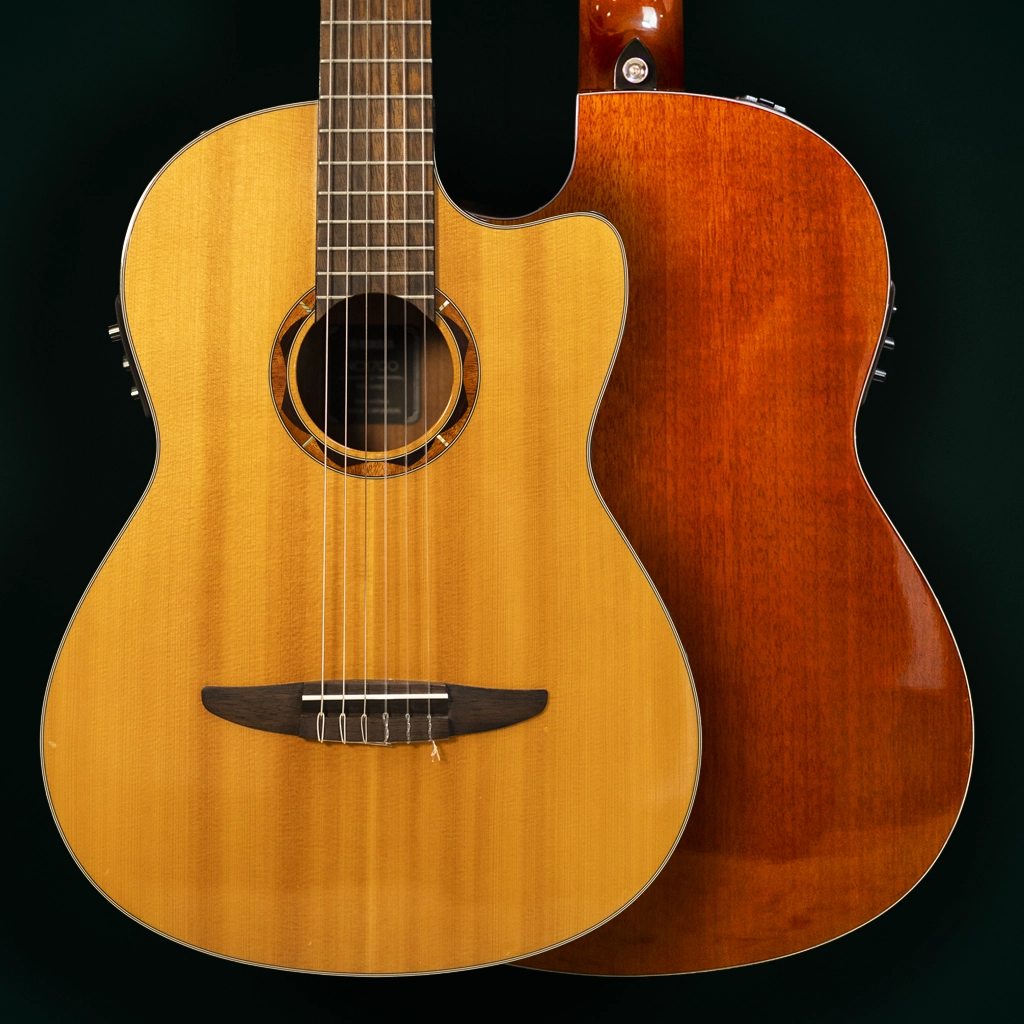
Yamaha therefore represents a broader kind of maker than an individual luthier's workshop. Its classical-guitar history includes specialist custom construction as well as instruments intended for study and everyday playing. What links those different levels is a sustained programme of development, drawing on traditional Spanish guitar making and Yamaha's wider experience with musical instruments. The particular materials, place of manufacture and level of hand work vary by model, so an individual guitar's specification is the clearest guide to its construction.

 View instrument ↗
