
When should I upgrade to a concert guitar?
There is no particular grade or playing standard at which you must upgrade to a concert guitar. It becomes worth considering when another instrument offers something you value: greater sensitivity, more musical colour, a more comfortable feel or simply a sound you enjoy more.
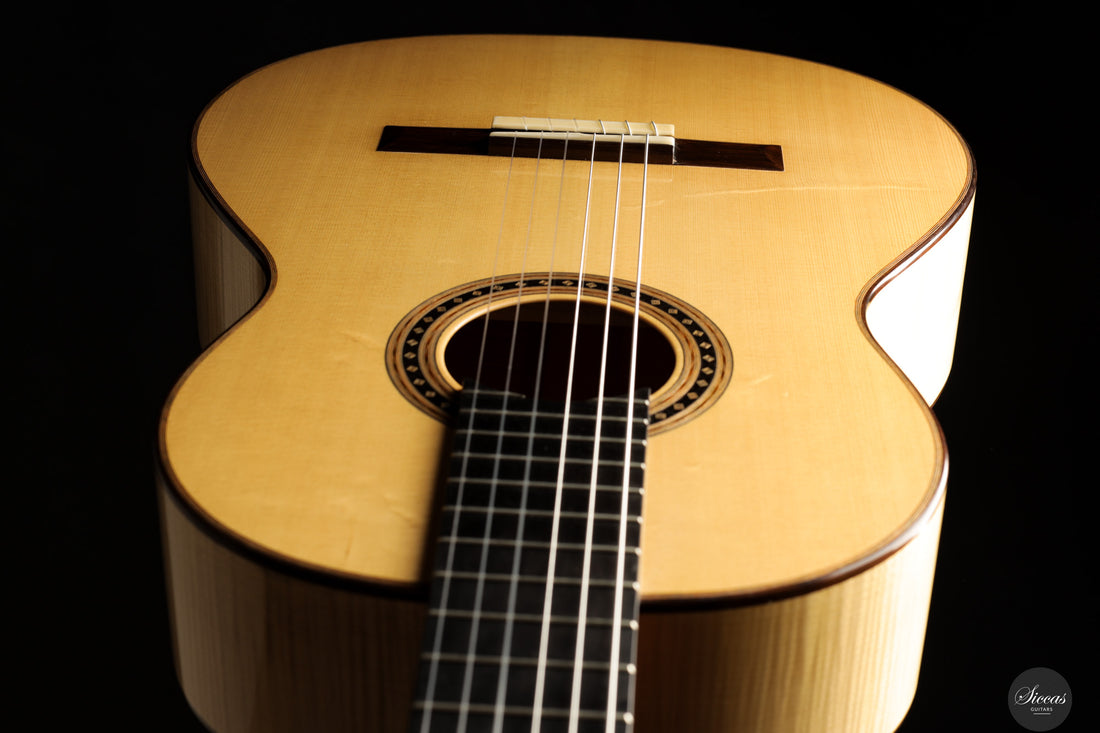
You do not need to wait until your current guitar becomes inadequate. Equally, progressing as a player does not oblige you to replace it—although your musical sensibilities may have other ideas!
What’s missing?
Before looking at makers or specifications, try finishing this sentence: “I would like my next guitar to…”
Perhaps you would like a melody to sing more clearly above its accompaniment. You may want a wider contrast between quiet and strong passages, or a guitar that responds more readily to a gentle touch.
Comfort can be just as important. Perhaps your current guitar never quite feels right in your hands, and a more suitable neck profile would make a real difference to your enjoyment.
The answer can also be straightforward: you would like a sound that gives you more pleasure, or a little more volume in reserve when the music calls for it.
These are useful starting points because they give a comparison a purpose. “A better guitar” is a broad ambition; knowing what you would like to hear or feel makes choosing much easier.
Compare guitars
Choose a few short passages you know comfortably. Include a melody, some accompaniment and a phrase with a change in dynamics. You do not need difficult repertoire to make a useful comparison.
Where possible, play the alternatives alongside your current guitar. Listen for the differences that matter to you rather than trying to notice everything at once. Can you shape a melody more naturally? Does the sound change more readily with your touch? Do familiar chords and stretches feel more comfortable?
Give yourself time to settle into each instrument. A striking first impression is worth noticing, but so is how much you enjoy playing after the initial excitement.
Ask yourself whether the differences are enjoyable, useful and worth the cost. Hearing someone else demonstrate the instruments can help, but give your own experience of playing them equal attention.
Support progress
You do not have to “earn” a fine guitar by reaching a particular grade or standard. A well-matched instrument can be part of your development, rather than simply a reward for it.
More comfortable playability can reduce unnecessary physical effort, while a sensitive response makes the effects of changes in touch easier to hear. A wider tonal palette gives you more possibilities to explore as your musical understanding develops.
You do not need to master those subtleties before buying the guitar. Learning to use them can be part of the pleasure of owning it.
No obligations
If your current guitar feels comfortable and gives you the sounds you want, keeping it is a sensible choice.
Equally, enjoying another instrument is a valid reason to consider a change, provided the purchase fits comfortably within your budget. The decision does not need to be justified by an examination, a performance or a problem with the guitar you already own.
Keep exploring
Read more about choosing a classical guitar, then explore the instruments currently available at CGA.
What defines a concert guitar?
Explore the materials, craftsmanship, projection, refined sound, tonal colours and playability that define a concert classical guitar.

Cedar vs Spruce Classical Guitars: What Actually Changes?
Cedar and spruce have recognisable tendencies, but the better choice comes from the complete guitar: its response, character and what its maker has done with the wood.

Choosing a classical guitar scale length
Scale length is the nut-to-saddle length of the vibrating string. It sets the spacing of the frets and helps determine string tension, shaping how a guitar feels under the hands and contributing to how the complete instrument responds.
Tell us what you currently play, what you would like to change and your approximate budget. We can help you decide what is worth comparing.