
Buying a pre-owned classical guitar
A good pre-owned classical guitar can be a rewarding musical partner. The useful questions are straightforward: what is it, what condition is it in, and does it help you play the music you enjoy? A recognisable name or an appealing price is only the beginning.
Why consider pre-owned?
Buying pre-owned opens a different choice of instruments. You may find an established maker within your budget, a discontinued model, or a particular combination of neck shape, construction and sound that is difficult to find new. The appeal is often individual character: a singing treble, a focused bass or a response that suits your touch.
Value means weighing the asking price against the instrument’s musical qualities, condition and any work it needs. Include the case, likely setup costs and delivery in that judgement. Pre-owned does not guarantee a saving, and age alone does not make a guitar sound better. Listen to what the instrument offers today rather than buying a promise about its future.
Establish identity and history
Start with the maker, model, year and any serial or instrument number. Ask for a clear label photograph and check that the description agrees with it. Record relevant specifications: soundboard and back-and-side woods, construction, scale length, nut width and string spacing. A maker’s name can appear on different ranges, so identify the model rather than assuming every instrument is a concert guitar.
CGA’s 1993 Robert Cross listing, for example, records a signed label, instrument No. 68 and a March 1993 date, alongside a 652 mm scale and 54 mm nut. Those are useful details about this particular guitar; they do not supply a complete ownership history.
Ask what is known about previous ownership, storage, alterations and repairs. Invoices, dated photographs and a repairer’s report provide evidence. ‘The previous owner says it has never been repaired’ should remain an attributed account, not become ‘verified repair-free’. A gap in the records is a reason to inspect carefully, not proof of a problem.
Understand condition and repairs
Light scratches, small dents and finish wear can be cosmetic. Cracks, an opening joint, a lifting bridge or unusual distortion need a different level of attention. A fine line may be in the finish or in the wood beneath it: photographs help, but cannot always settle the distinction. Ask for an experienced repairer’s assessment where the cause or stability is uncertain.
A professionally repaired guitar deserves an individual assessment. Ask what happened, where the damage was, who repaired it, what work was done and whether follow-up checks are documented. A visible repair need not rule out a fine instrument, but ‘professionally repaired’ is not enough on its own to establish present condition.
Environment belongs in the history too. The Canadian Conservation Institute’s humidity guidance explains that changing humidity changes wood’s moisture content and dimensions. Restraint within an assembled object can turn that movement into damaging stress. Ask about storage and any known drying or damp exposure; a photograph cannot reconstruct past conditions. Our guitar maintenance guide explains ongoing care.
Check fit and playability
Hold the guitar in your usual playing position. Notice neck depth and shape, not just nut width. Try first-position chords, a barré, a familiar stretch and a passage higher up the neck. String spacing at the nut affects the left hand; spacing at the saddle affects the right. Neither measurement tells the whole story of comfort.
Scale length affects fret spacing, and the same strings at the same pitch generally have less tension on a shorter scale. Compare the complete instrument rather than choosing by a number alone; our scale-length guide explores these distinctions.
Action is the clearance between strings and frets. Ask for bass and treble measurements at the twelfth fret, plus the strings fitted. A comfortable setup should allow clean playing at your normal dynamics. Check for fret grooves, rough ends, buzzing or notes that die abruptly. High action is not always a simple saddle adjustment: ask what can realistically be changed. See classical guitar action explained.
Listen with familiar music
Use a quiet room and music you know well. Listen for response at a light touch, balance between strings and registers, sustain through a phrase, and colours you can control. A large initial sound is less useful if the melody disappears behind the bass or stronger playing quickly becomes harsh.
- 01
Play a slow scale into higher positions.
Notice whether notes speak evenly or particular notes lose body or sustain.
- 02
Play eight familiar bars with melody and accompaniment.
Listen for a clear tune, distinct bass and enough sustain to connect the phrase.
- 03
Repeat those bars quietly, then more firmly.
Notice the usable dynamic range before buzz or loss of clarity limits you.
- 04
Repeat a short phrase near the bridge and nearer the fingerboard.
Listen for contrasting colours that remain pleasing and repeatable.
Keep the order, tempo and playing position consistent when comparing guitars. Note the strings and their condition, because worn strings can cloud the comparison. If possible, hear someone else play from a few metres away. Afterwards, write down one strength, one limitation and how comfortable you felt.
Ask before committing
Request current photographs of the front, back, sides, bridge, neck, label and any wear or repaired area. Ask for repair details, the present setup, any proposed work and its cost. Confirm exactly which case and accessories are included, and whether the description records all known material issues.
CGA’s recorded pre-loved process starts with structural and condition inspection, moves through setup and playability checks, then a playing assessment of response, balance and musical character. Relevant wear, repairs and known history are recorded in the individual condition report. Read that report for the guitar you are considering and ask about anything unclear.
Check arrangements for your order before paying. CGA’s delivery information confirms tracked, fully insured guitar shipments and checks before dispatch, with setup adjustments where required. Read our returns policy for details of the 14-day home trial for qualifying non-bespoke guitars. Confirm the start date and return procedure, and budget for postage and insurance if returning because you change your mind. Care for the instrument and retain its case, accessories and packing during the trial.
Your buying checklist
- Identity: maker, model, year and relevant specifications checked.
- History: documented facts separated from previous-owner information.
- Condition: wear, structural concerns and repair details understood.
- Fit: neck, scale, spacing, action and frets suit your playing.
- Sound: familiar music confirms response, balance, sustain, colour and dynamic range.
- Purchase: total cost, included case, delivery and return arrangements clear.
Questions about buying Pre-owned?
Get in touch.
Ask us about an instrument, its condition or finding the right guitar for your playing.
Source notes
Prepared from CGA’s collection records, individual listings, buying information and the Canadian Conservation Institute’s educational guidance, checked on 1 October 2026. The listening trial is practical playing guidance. Listings illustrate individual instruments; availability can change.
- CGA pre-loved collection and recorded assessment process
Structural and condition inspection, setup and playability checks, then a playing assessment. The individual report records relevant wear, repairs and history.
- Robert Cross Concert (1993): identity and specifications
CGA records a signed label, No. 68, March 1993, a 652 mm scale and 54 mm nut. These details do not establish a complete ownership history.
- Canadian Conservation Institute: Incorrect relative humidity
The section on RH fluctuations explains moisture-driven dimensional changes and the effect of restraint within an assembled object. It supports the environmental principles here, rather than a guitar-specific humidity target or a diagnosis from photographs.
- CGA delivery arrangements
Guitars are checked on arrival and before dispatch, with adjustments where required; guitar shipments are tracked and fully insured. Confirm the arrangements for the particular order.
- CGA returns policy
CGA’s returns policy specifies a 14-day trial for qualifying non-bespoke guitars from receipt or collection, with customer-paid postage and insurance for change-of-mind returns. Read the full procedure and conditions before ordering.
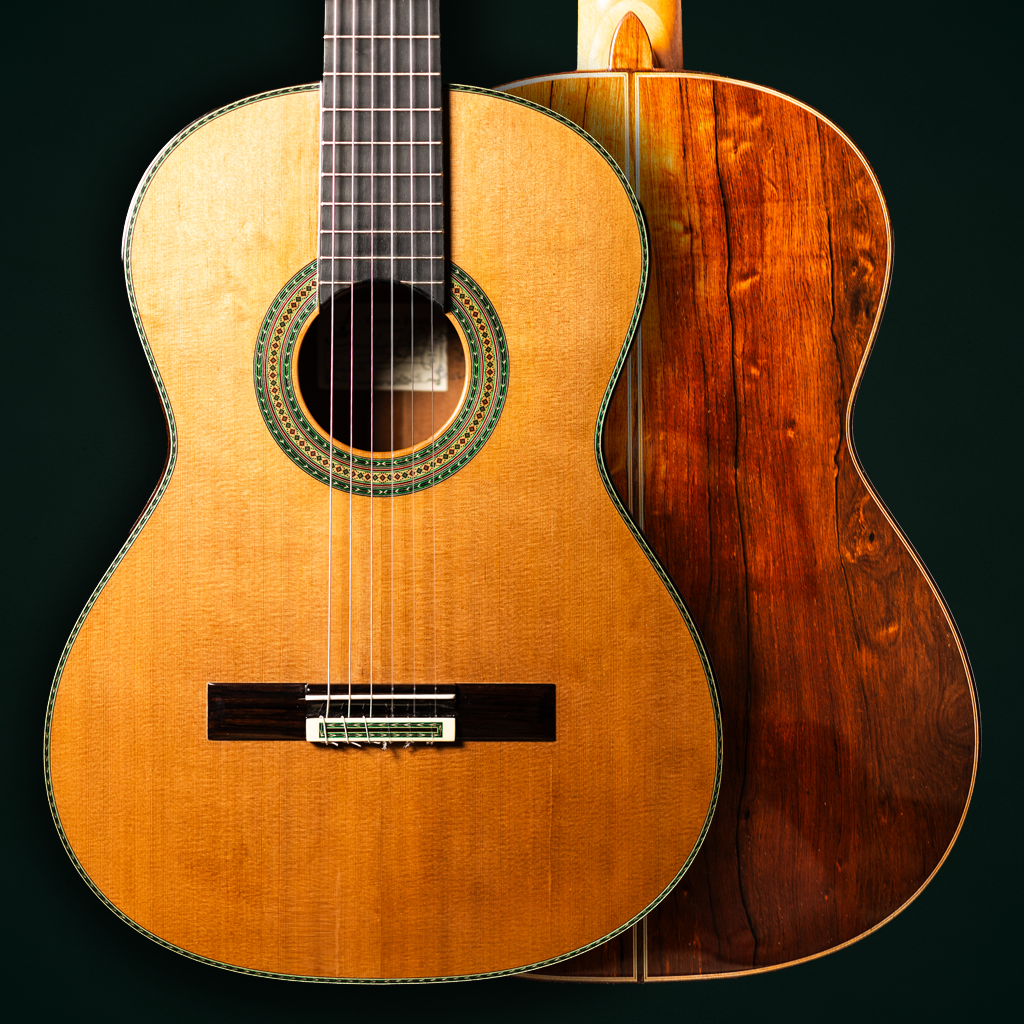
Header photograph: Classical Guitar Academy’s pre-owned 2025 Antonio Picado Concierto DT.
Keep exploring
Read more about choosing a classical guitar, then explore the instruments currently available at CGA.
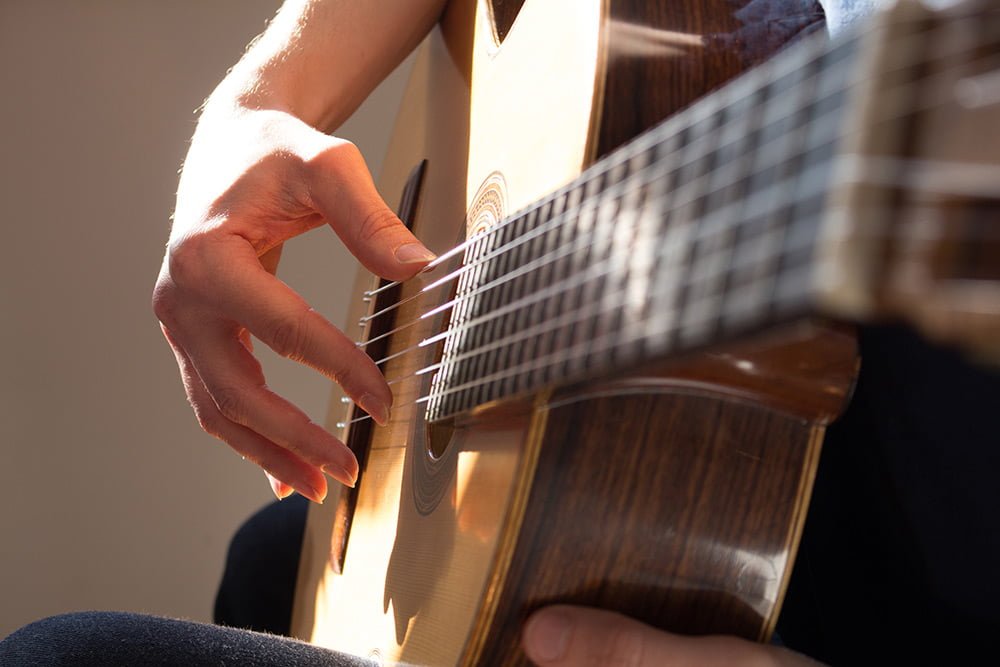
Choosing a classical guitar scale length
Scale length is the nut-to-saddle length of the vibrating string. It sets the spacing of the frets and helps determine string tension, shaping how a guitar feels under the hands and contributing to how the complete instrument responds.
When should I upgrade to a concert guitar?
There is no particular grade or playing standard at which you must upgrade to a concert guitar. It becomes worth considering when another instrument offers something you value: greater sensitivity, more musical colour, a more comfortable feel or simply a sound you enjoy more.
What defines a concert guitar?
Explore the materials, craftsmanship, projection, refined sound, tonal colours and playability that define a concert classical guitar.
Tell us what you currently play, what you would like to change and your approximate budget. We can help you decide what is worth comparing.